Gorillas in Africa: Complete Guide to Where & How to See Them
Africa is home to all the world’s gorillas in Africa, with two distinct species living in the forests of Central and Eastern Africa. These magnificent primates inhabit only ten countries across the continent, making Africa the exclusive natural habitat for both mountain and lowland gorillas. Understanding where to find these endangered animals is crucial for conservation efforts and wildlife tourism.
Are There Gorillas in Africa: Species and Distribution
Yes, there are gorillas in Africa, and they exist nowhere else in the wild. All gorilla populations are confined to the tropical forests of equatorial Africa, spanning from the Atlantic coast to the volcanic mountains of East Africa. The continent hosts two main species: the Western Gorilla and the Eastern Gorilla, each with distinct subspecies that have adapted to different forest environments over millions of years.
The largest gorillas in Africa are the Eastern Lowland Gorillas, also known as Grauer’s gorillas, which can weigh up to 440 pounds. These impressive primates primarily inhabit the Democratic Republic of Congo’s eastern forests, making them one of the most endangered gorilla subspecies with fewer than 3,800 individuals remaining in the wild as of 2024.
Western Gorilla Distribution
Western Gorillas are found in six countries in Africa, including Cameroon, Central African Republic, Democratic Republic of Congo, Equatorial Guinea, Gabon, and Nigeria. The Cross River Gorillas, a critically endangered subspecies, number fewer than 300 individuals and live exclusively along the Cameroon-Nigeria border. Western Lowland Gorillas represent the largest gorilla population, with approximately 100,000 individuals scattered across dense rainforests.
Eastern Gorilla Distribution
Eastern Gorillas inhabit four countries: Democratic Republic of Congo, Rwanda, Uganda, and a small population in southern Sudan. The famous silverback gorillas in Africa that most tourists encounter are Mountain Gorillas, living in the Virunga Mountains and Bwindi Impenetrable Forest. These regions contain the world’s entire population of approximately 1,000 Mountain Gorillas, making them incredibly rare and precious.
What Country Has the Most Gorillas in Africa
The Democratic Republic of Congo (DRC) has the most gorillas in Africa, hosting approximately 80% of all gorilla populations on the continent. This vast Central African nation contains significant populations of all four gorilla subspecies, making it the world’s gorilla capital. The country’s extensive rainforests provide ideal habitat for Western Lowland Gorillas, Eastern Lowland Gorillas, and Mountain Gorillas.
Gabon ranks second with an estimated 35,000 Western Lowland Gorillas, representing about 60% of the country’s total gorilla population. Cameroon follows with approximately 9,000 gorillas, while Uganda and Rwanda each host around 400-500 Mountain Gorillas. These numbers fluctuate based on conservation efforts, habitat protection, and annual census data collected by wildlife organizations.
Best Countries to See Gorillas in Africa
Rwanda, Uganda, and the Democratic Republic of Congo offer the best gorilla tours in Africa for observing these magnificent primates in their natural habitat. Rwanda’s Volcanoes National Park provides the most accessible and well-organized gorilla trekking experiences, with excellent infrastructure and professional guides. The country has invested heavily in gorilla tourism, making it the safest and most reliable destination for gorilla encounters.
Uganda’s Bwindi Impenetrable National Park hosts the largest population of Mountain Gorillas in a single location, with over 400 individuals across multiple habituated groups. The park offers various trekking options, from shorter walks to challenging multi-day expeditions. Uganda also provides better value for money compared to Rwanda, with gorilla permits costing $700 versus Rwanda’s $1,500 as of 2024.
Rwanda: Premium Gorilla Experience
Rwanda offers the most luxurious and accessible gorilla viewing experience in Africa, with Volcanoes National Park located just two hours from Kigali International Airport. The country’s commitment to conservation and tourism infrastructure makes it the top choice for visitors seeking comfort and reliability. Ten habituated gorilla groups are available for tracking, with permits including park entry, guides, and porters.
Uganda: Diverse Gorilla Locations
Uganda provides the most diverse gorilla trekking options, with experiences available in both Bwindi Impenetrable National Park and Mgahinga Gorilla National Park. Bwindi alone contains four different sectors, each offering unique landscapes and gorilla families. The country allows up to eight visitors per gorilla group daily, compared to Rwanda’s similar regulations, but at more affordable prices.
Where is the Safest Place to See Gorillas in Africa
Rwanda is widely considered the safest place to see gorillas in Africa, with excellent security measures, stable political conditions, and well-maintained infrastructure. The country has transformed since the 1994 genocide, becoming one of Africa’s most secure and efficiently managed nations. Gorilla trekking areas are heavily protected by park rangers and military personnel, ensuring visitor safety throughout the experience.
Uganda ranks as the second safest option, particularly in the Bwindi region, which has maintained stability and security for over two decades. The Uganda Wildlife Authority works closely with local communities and security forces to protect both gorillas and tourists. However, some border areas near the Democratic Republic of Congo require additional caution and guidance from experienced tour operators.
Why Do Gorillas Only Live in Africa
Gorillas only live in Africa because the continent provides the specific climatic conditions, forest ecosystems, and evolutionary history necessary for their survival. These primates evolved in Africa’s tropical rainforests over millions of years, developing adaptations perfectly suited to the continent’s unique environments. The dense canopy forests, abundant vegetation, and stable year-round temperatures create ideal conditions for gorilla populations.
The evolutionary separation of Africa from other continents, combined with specific ecological niches, prevented gorillas from naturally spreading to other regions. Africa’s extensive rainforest belt, stretching from West to Central and Eastern Africa, provides the continuous forest habitat that gorillas require for survival. No other continent possesses the combination of climate, vegetation, and ecological conditions necessary to support wild gorilla populations.
Biggest Gorillas in Africa: Size and Characteristics
The biggest gorillas in Africa are male Eastern Lowland Gorillas, which can reach heights of 5.9 feet and weigh up to 440 pounds when fully mature. These impressive primates are significantly larger than their mountain-dwelling cousins, with broader chests and longer arms adapted for ground travel through dense lowland forests. Adult males develop distinctive silver-gray hair on their backs, earning them the title of silverback gorillas.
Mountain Gorillas, while slightly smaller, are equally impressive, with adult males weighing 350-400 pounds and standing up to 5.6 feet tall. These silverback gorillas in Africa possess incredible strength, estimated to be 6-15 times stronger than humans. Their muscular build enables them to navigate steep mountain terrain and defend their families from potential threats in the challenging volcanic region environment.
Physical Adaptations
Gorillas have developed remarkable physical adaptations for their African forest environments, including powerful arms for knuckle-walking, opposable thumbs for grasping vegetation, and strong jaw muscles for processing tough plant materials. Their thick, dark fur provides protection against insects and temperature variations in high-altitude regions. Gorillas in Africa also possess excellent eyesight and hearing, crucial for detecting predators and communicating across dense forest canopies.
Social Structure
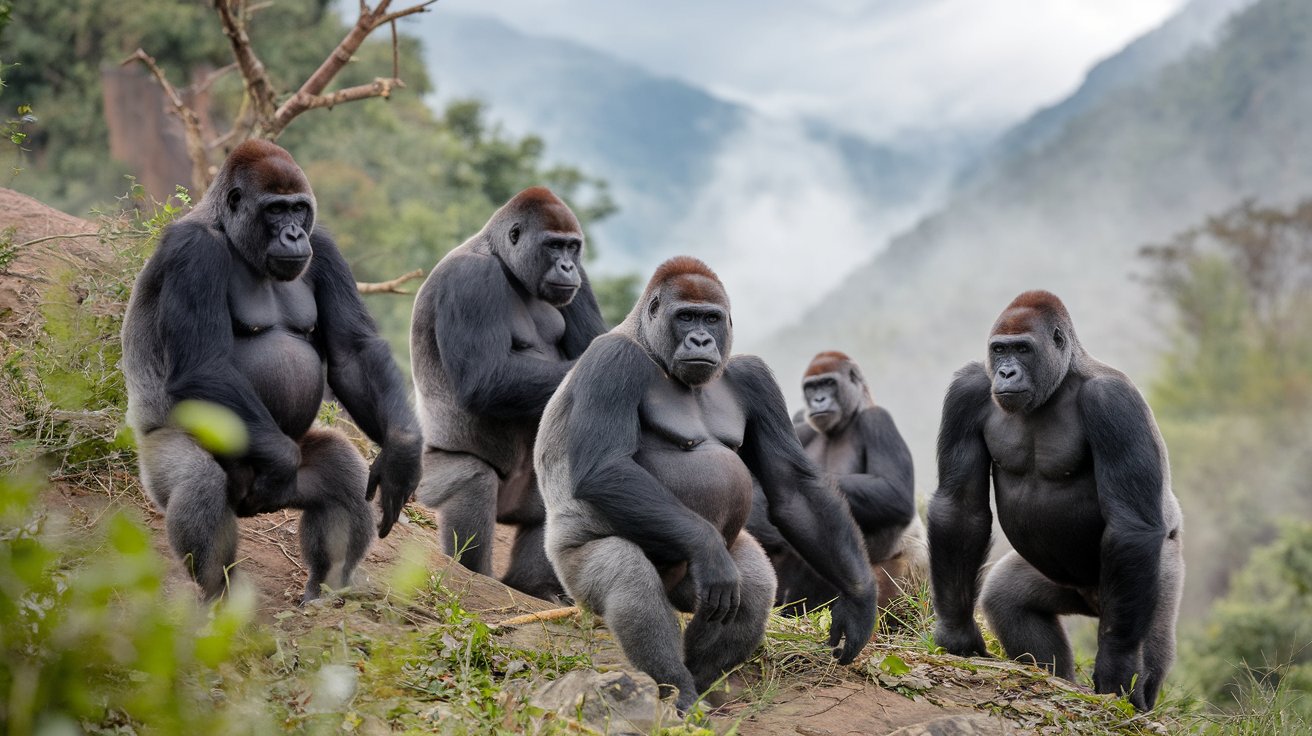
African gorillas live in social groups led by dominant silverback males, typically consisting of 8-12 individuals including females, juveniles, and young males. The silverback makes all major decisions regarding movement, feeding, and protection of the group. This social structure has evolved specifically for gorilla survival in African forests, where cooperation and strong leadership are essential for finding food and avoiding dangers.
Gorilla Conservation Status in Africa
Gorilla conservation in Africa faces significant challenges, with all species classified as Critically Endangered by the International Union for Conservation of Nature. Mountain Gorillas have shown remarkable recovery, increasing from 650 individuals in the 1980s to over 1,000 today through intensive conservation efforts. However, gorillas in Africa facts reveal that other subspecies continue to decline due to habitat loss, poaching, and human encroachment.
Conservation organizations estimate that Africa loses approximately 2% of its gorilla habitat annually due to deforestation, mining, and agricultural expansion. The COVID-19 pandemic highlighted additional threats, as gorillas share 98% of human DNA and are susceptible to human diseases. Successful conservation requires community involvement, anti-poaching efforts, and sustainable tourism programs that provide economic incentives for protecting these magnificent creatures.
Planning Your Gorilla Safari in Africa
Planning the best gorilla tours in Africa requires advance booking, typically 6-12 months ahead, as permits are limited and in high demand. Rwanda issues 80 permits daily, while Uganda allows 96 visitors across its gorilla parks. Peak seasons (June-September and December-February) require even earlier bookings, with some tour operators accepting reservations up to 18 months in advance.
Physical preparation is essential for gorilla trekking, as expeditions can involve 2-8 hours of hiking through challenging terrain at altitudes up to 8,000 feet. Visitors should maintain moderate fitness levels and prepare for muddy, steep trails. Essential equipment includes waterproof hiking boots, rain gear, long pants, and gardening gloves for gripping vegetation during the trek to see gorillas in Africa.
Related video about Gorillas in Africa
This video complements the article information with a practical visual demonstration.
FAQ – Common Questions
Are there any gorillas in Africa?
Yes, Africa is the only continent where gorillas exist in the wild. All gorilla species and subspecies are found exclusively in the tropical forests of Central and Eastern Africa, spanning ten countries including Rwanda, Uganda, Democratic Republic of Congo, Cameroon, Gabon, and others. No gorillas live naturally outside of Africa.
What country has the most gorillas in Africa?
The Democratic Republic of Congo has the most gorillas in Africa, hosting approximately 80% of the continent’s total gorilla population. The country contains significant numbers of all four gorilla subspecies, with an estimated 15,000-20,000 Western Lowland Gorillas and 3,800 Eastern Lowland Gorillas, plus Mountain Gorillas in the Virunga region.
Where is the safest place to see gorillas in Africa?
Rwanda is considered the safest place to see gorillas in Africa, offering excellent security, stable political conditions, and well-maintained infrastructure. Volcanoes National Park provides the most accessible and reliable gorilla trekking experience, with professional guides, park rangers, and military protection ensuring visitor safety throughout the expedition.
Why do gorillas only live in Africa?
Gorillas only live in Africa because they evolved specifically in the continent’s tropical rainforest environments over millions of years. Africa’s unique combination of climate, dense forest ecosystems, abundant vegetation, and stable temperatures provides the exact conditions gorillas need for survival. No other continent possesses these specific ecological requirements.
How many gorillas are left in Africa?
Approximately 100,000-120,000 gorillas remain in Africa as of 2024, with the vast majority being Western Lowland Gorillas. Mountain Gorillas number around 1,000 individuals, while Eastern Lowland Gorillas are critically endangered with fewer than 3,800 remaining. Cross River Gorillas are the most endangered, with under 300 individuals surviving.
What is the best time to visit gorillas in Africa?
The best time to visit gorillas in Africa is during the dry seasons: June-September and December-February. These periods offer easier trekking conditions with less mud and rain, better visibility for photography, and more comfortable camping weather. However, gorilla trekking is possible year-round, and wet season visits often provide more lush forest scenery and fewer crowds.
| Country | Gorilla Population | Best For |
|---|---|---|
| Democratic Republic of Congo | 80,000+ gorillas | Largest populations, research opportunities |
| Rwanda | 400+ Mountain Gorillas | Luxury tourism, safety, accessibility |
| Uganda | 500+ Mountain Gorillas | Best value, diverse trekking options |
| Gabon | 35,000+ Western Lowland | Lowland gorilla viewing, pristine forests |